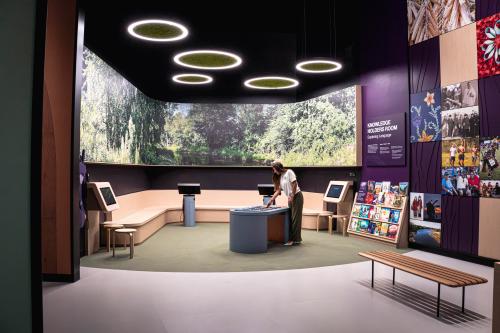
From the moment you enter the Kahnekano·lú Cultural Center, you feel the impact. Visitors begin in an immersive, darkened space where they will hear the Oneida Thanksgiving address, also known as Kanehelatúksla, traditionally shared at the beginning of ceremonies and cultural gatherings. It’s a fitting introduction to a space designed to invite visitors into the history, art, and culture of the Oneida people.
Three times the size of the Oneida Nation Museum it replaces, the new center provides more room to share a collection that has been growing since 1979. In fact, 99% of what visitors see comes from the Oneida community itself. Traditional galleries, immersive exhibits, and hands-on experiences all invite visitors to explore Oneida history, stories, art forms, and contemporary culture. But Kahnekano·lú is more than a museum. It’s a celebration of a living, active culture that exists right here in the Green Bay area.
Meet Stacy
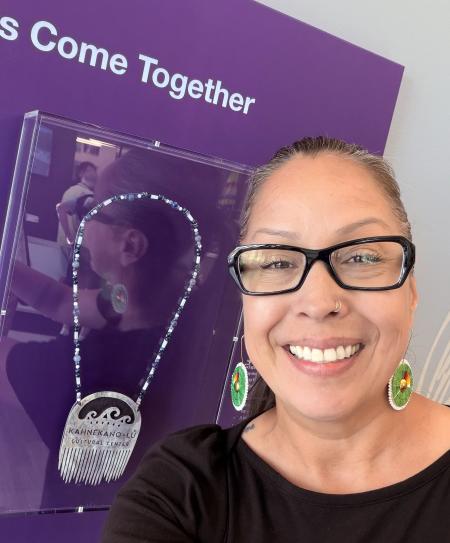
For this edition of “Meet a Cheesehead,” we chatted with Stacy S. Coon, the cultural center’s Director, to learn more about Kahnekano·lú, her career as a museum professional, and her vision for helping visitors better understand Oneida culture, both past and present.
(And if you’re curious about how to pronounce Kahnekano·lú, practice your pronunciation with help from a Oneida tribal member!)
Q & A
DGB: For visitors who may be unfamiliar, can you share the story behind the Kahnekano·lú Cultural Center, why this new space was created, and some of the goals you have for the center?
Stacy: The KCC was re-imagined as a dedicated tribal space, not just a museum, where we share our culture and history with our community as well as those outside of our community. It was important that we incorporate as many elements of the Oneida culture into the design and detail of the inside of the building and our exhibits, which also included outside design elements as well. Overall, we wanted to instill pride in our identity, raise awareness, and empower our community with a dedicated space that preserves our one-of-a-kind collection for future generations.
DGB: What led you to your role as director of the Kahnekano·lú Cultural Center?
Stacy: I have been a museum professional for over 20 years. I was bitten by the museum bug while interning for the Smithsonian’s National Museum of the American Indian in Washington, D.C. After this, I continued to stay in the museum field, working for other tribal museums and honing my skills in this profession.
DGB: What does this work mean to you personally?
Stacy: As a Native American woman, I was always taught to love myself and be proud of who I was and to be knowledgeable about our contributions to this country. What better job to have than one where I get to learn about my Oneida culture and help preserve those different aspects of our history and our people than in the museum field? It never has felt like a job to me because I truly am doing what I love to do.
DGB: Who or what has had the biggest influence on your career path?
Stacy: The first one would have to be my father, my biggest cheerleader, who always encouraged me to learn about Native history and always instilled a positive sense of identity not only in myself but for Native people. The second is the experiences I have had throughout my career. Every experience made me fall in love with the profession even more; being able to combine the love of my culture and history and the preservation of our material culture influenced me the most.
DGB: Was there a specific moment or experience that inspired your passion for preserving and sharing Oneida history and culture?
Stacy: It would have to be assisting with the Grand Opening ceremonies of the Smithsonian National Museum of American Indian in 2004. Being in the background of the preparation that went into such a huge event really helped me realize just how multi-faceted the museum field can be. And being able to be so close to such tangible pieces of history really inspired my passion to want to get to know more and be an active part of preserving history and material culture.
DGB: What has been the most challenging part of opening this new space?
Stacy: Staying on top of the amount of detailed work that went on in the background in order to see everything on display and tell our story accurately, all while still running the old museum AND preparing to pack it all up AND move it AND prepare for a grand opening. A lot of plates spinning, that’s for sure. But we did it; my staff and I literally moved an ENTIRE museum. Yes, it was challenging, but also a very proud moment for us as a staff and the entire community as well.
DGB: What is something people might not realize about the work that goes into running the cultural center?
Stacy: You wear many hats, which can seem daunting at times, and it is never predictable, but that is what makes it so fun. You are also learning something new every day, and that’s rewarding in itself, whether it's something new about Oneida culture, the exhibits, or just the new building in general.
DGB: What are some aspects of Oneida culture or history that you hope visitors gain a deeper understanding of?
Stacy: I would have to say that we are a rich, living culture that still actively practices our traditional and cultural ways. And certain aspects of that culture, we love to share with visitors to help them gain a better understanding of who we are as Oneida people.
DGB: Are there any exhibits, artifacts, or displays that you are especially excited for visitors to experience?
Stacy: I would have to say the replicated longhouse ‘hands-on area’ and the cornhusk dolls with fingers on display that we hear are an art form specifically created only by the Oneida in Wisconsin.
DGB: For someone visiting the Green Bay area, why should they add Kahnekano·lú Cultural Center to their itinerary?
Stacy: To help them gain a better understanding of what makes us Oneida. They will experience it through our art forms, our songs, our dances, and our stories. They will see who we are through our engaging hands-on exhibits, programming, and other interactive materials that help share our culture, our history, and our art forms.
More Than a Museum
There’s plenty to explore beyond the main exhibits at Kahnekano·lú Cultural Center. The center offers workshops and spaces for cultural performances, creating opportunities for visitors to engage with Oneida culture in even more ways, such as monthly coffee chats with the center’s Cultural Heritage staff and Smoke Dance Workshops.
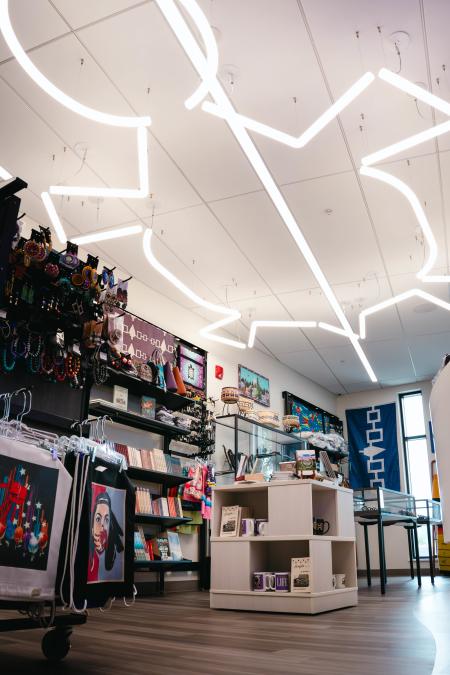
The center also features a gift shop open during regular center hours, with original works by Oneida artists, including baskets, pottery, and raised beadwork.
Visit the Kahnekano·lú Cultural Center at 760 Airport Dr., Hobart, WI 54155, open Tuesday through Friday from 8:30am to 4:00pm and Saturday from 9:00am to 1:00pm.